

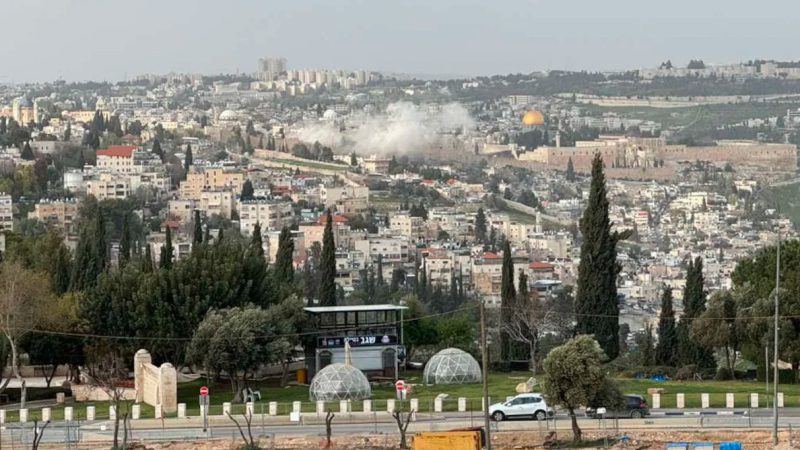


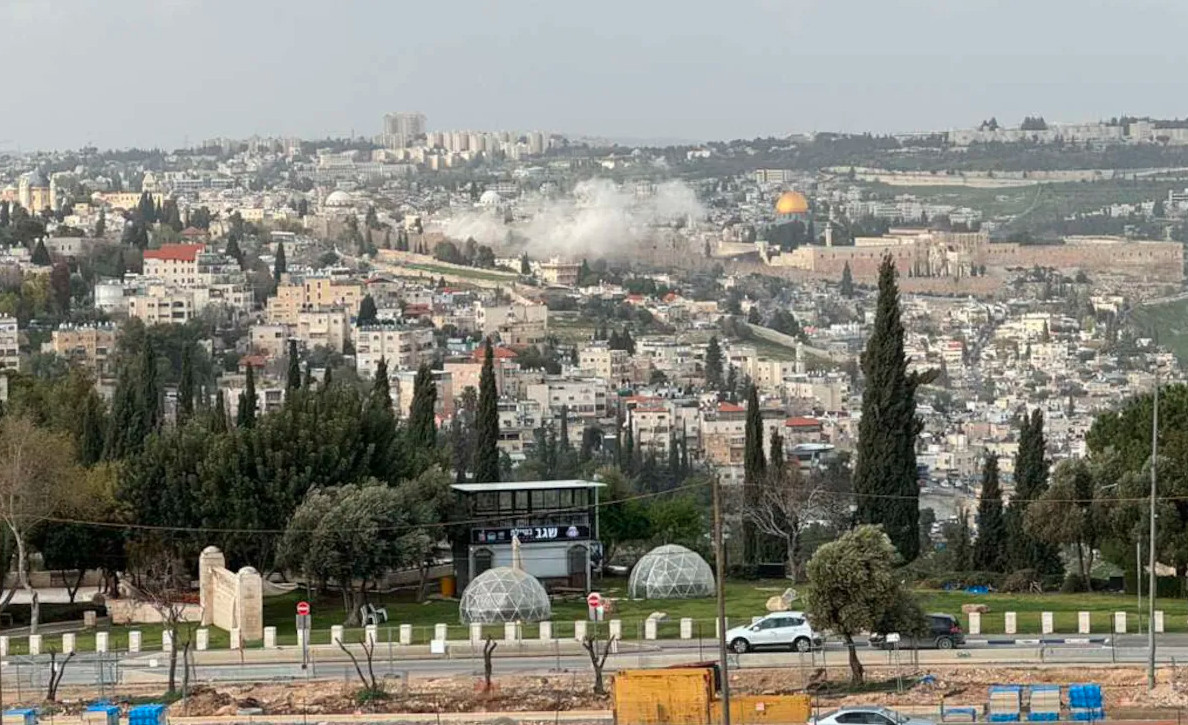
An Iranian missile struck Jerusalem during Eid al-Fitr, landing just a few hundred metres from the Al-Aqsa Mosque, one of the holiest sites in Islam. The incident forced hundreds of Muslim worshippers to perform Eid prayers outside the gates of the Old City after being denied entry for the first time in nearly six decades.
According to Israel Ministry of Foreign Affairs, the missile landed dangerously close to religious landmarks significant to Muslims, Christians, and Jews. In a statement posted on X, the ministry condemned the strike, calling it a reflection of Iran’s actions during the ongoing conflict.
The explosion, reported a day earlier, created a crater inside the Old City area, scattering debris across nearby roads following missile warning sirens. The Israel Defense Forces confirmed that the impact occurred near the Temple Mount, a site of major religious importance.
“The Old City in Jerusalem, right near the Temple Mount, was impacted by Iranian missile fragments,” the military said, accusing Iran of targeting both civilian areas and sensitive religious locations.
Amid heightened security concerns, Israeli authorities restricted access to key religious sites, preventing worshippers from reaching Al-Aqsa Mosque. As a result, large crowds gathered outside the Old City gates to offer Eid prayers.
Local residents expressed distress over the situation. One Palestinian worshipper described the moment as deeply painful, noting that access to the mosque had been effectively taken away during one of the most important religious occasions.
Since the escalation of hostilities between Israel, the United States, and Iran on February 28, access has been limited to major religious sites in Jerusalem, including Church of the Holy Sepulchre and the Western Wall, further intensifying tensions in the region.
